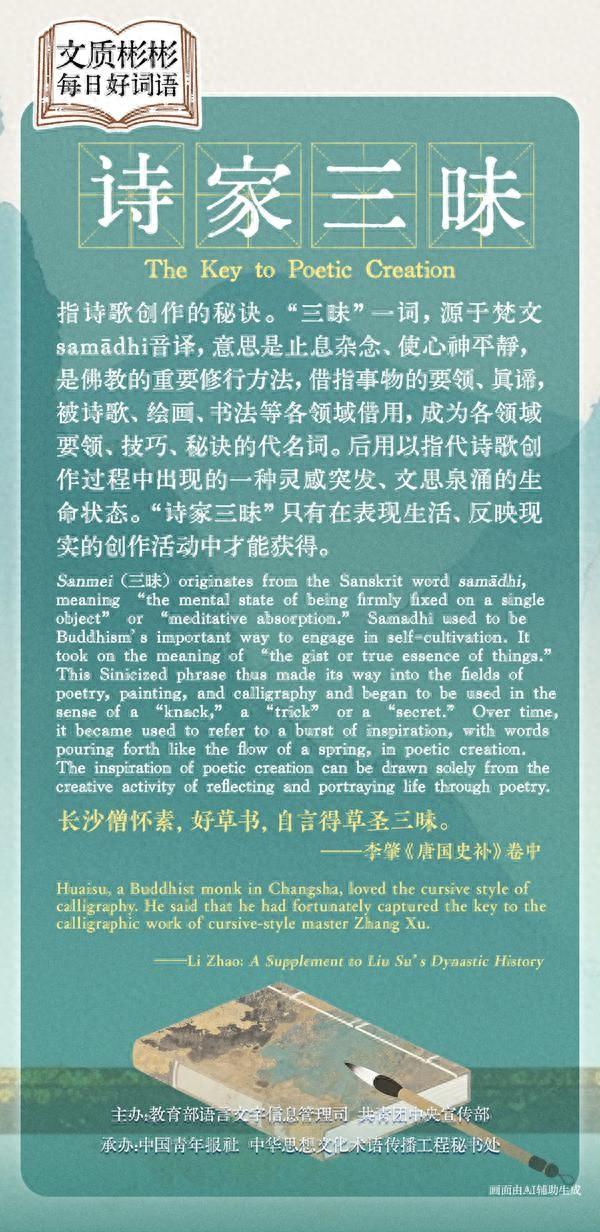
指诗歌创作的秘诀。“三昧”一词,源于梵文samādhi音译,意思是止息杂念、使心神平静,借指事物的要领、真谛,被诗歌、绘画、书法等各领域借用,成为各领域要领、技巧、秘诀的代名词。后用以指代诗歌创作过程中出现的一种灵感突发、文思泉涌的生命状态。“诗家三昧”只有在表现生活、反映现实的创作活动中才能获得。
TheKeytoPoeticCreation
SanmeioriginatesfromtheSanskritwordsamādhi,meaning/"thementalstateofbeingfirmlyfixedonasingleobject/"or/"meditativeabsorption./"Ittookonthemeaningof/"thegistortrueessenceofthings./"ThisSinicizedphrasethusmadeitswayintothefieldsofpoetry,painting,andcalligraphyandbegantobeusedinthesenseofa/"knack,/"a/"trick/"ora/"secret./"Overtime,itbecameusedtorefertoaburstofinspiration,withwordspouringforthliketheflowofaspring,inpoeticcreation.Theinspirationofpoeticcreationcanbedrawnsolelyfromthecreativeactivityofreflectingandportrayinglifethroughpoetry.
引例
长沙僧怀素,好草书,自言得草圣三昧。(李肇《唐国史补》卷中)(长沙僧人怀素喜爱草书,说自己悟到了“草圣”张旭书法的诀窍。)
Huaisu,aBuddhistmonkinChangsha,lovedthecursivestyleofcalligraphy.Hesaidthathehadfortunatelycapturedthekeytothecalligraphicworkofcursive-stylemasterZhangXu.(LiZhao:ASupplementtoLiuSu/'sDynasticHistory)
 来源:中国青年报
 海量资讯、精准解读,尽在新浪财经APP
 编辑: 来源:
